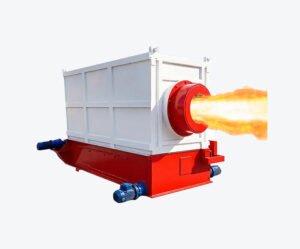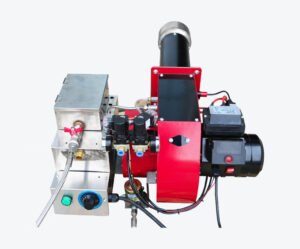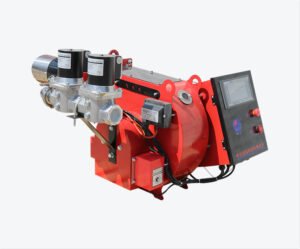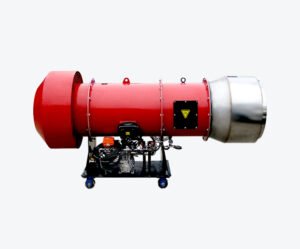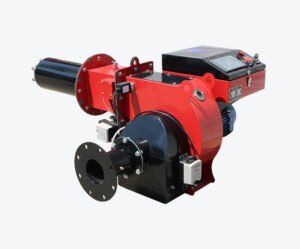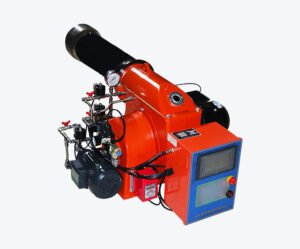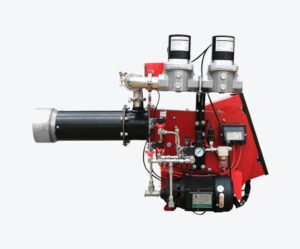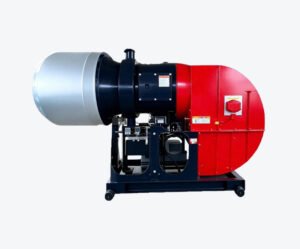
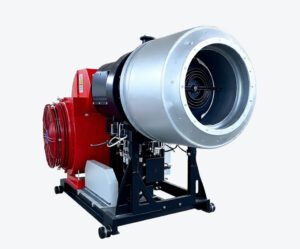
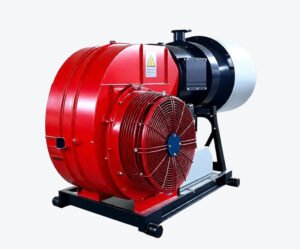
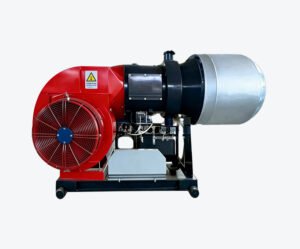
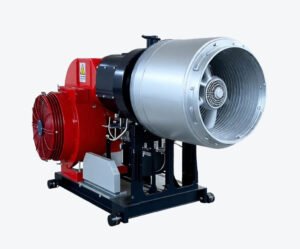


Pulverized Coal Burner is a high-precision intelligent burner for 1000-5000 type asphalt mixing plants. With integrated modular skid-mounted design for easy maintenance, it achieves up to 99.03% burnout rate and 1:3 combustion adjustment ratio (customizable to 1:4). Equipped with multi-air duct classification and FGR technology, it ensures stable combustion, low NOx emissions and anti-coking. It supports natural gas/LPG ignition for smooth coal switching, meets strict environmental standards, and allows customized color and parameters.
Key Features:
1. Triple-Fuel Compatibility (Coal / Gas / Oil)
A unified burner system that supports three major fuel categories, enabling seamless adaptation to regional energy structures and long-term project fluctuations.
2. Electronic Proportional Control Across All Fuel Types
Advanced digital regulation ensures balanced fuel–air supply for each fuel mode, optimizing combustion quality and reducing manual intervention.
3. Stable Output for 500–5000 Capacity Asphalt Plants
Engineered to deliver consistent heat output across small, medium, and large asphalt plant models without sacrificing combustion efficiency.
4. Modular Internal Fuel Line Architecture
Coal feed channels, gas pipelines, and oil circuits are integrated into a consolidated structure, simplifying installation and minimizing cross-system interference.
5. Enhanced Thermal Efficiency Through Real-Time Adjustment
Customer Benefits
1. Full Fuel Strategy Freedom
Switch among coal, gas, and oil depending on market price, onsite availability, or regulatory requirements—allowing operators to maintain cost stability all year round.
2. Lower Operational Risk
Energy supply interruptions are less likely to halt production, as the burner can be quickly converted to an alternative fuel without hardware changes.
3. Reduced Total Energy Cost
By optimizing combustion efficiency and enabling fuel substitution, the EC series helps significantly reduce total fuel expenditure across long production cycles.
4. Better Adaptation for Global Asphalt Projects
Ideal for regions where energy sources vary—such as Africa, South America, Central Asia, or remote construction sites relying on temporary fuel logistics.
5. Higher Equipment Utilization Rate
A single burner system supports multiple project types & energy scenarios, extending its lifecycle value and decreasing reinvestment requirements.
Load-based control reduces unnecessary fuel burn and maintains flame stability even under rapid production changes or variable moisture content in aggregates.
Main Features:
- The primary air is direct-flow, which enhances the penetration of pulverized coal.
- Enriched pulverized-coal ring that is equipped within the primary air duct can separate the primary air and powder mixture, improve the low-load stable combustion capacity and reduce Nox emissions.
- Setted with a transitional direct-flow air outside the primary air, the burner can enhance the air classification and properly prevent the coal powder from fastly outward diffusion.
- Adjustable swirler in secondary air duct can flexibly adjust the flame size to better match with the boiler.
- Equipped with internal combustion chamber space to accelerate precipitating volatile components, improving low-load combustion stability, and reducing ignition fuel consumption.
- Tertiary air is also a direct-flow which can effectively avoid coking phenomenon.
- Using flue gas circulation technology (FGR) to further reduce Nox emissions.
- The burner operates normally by first igniting with natural gas/LPG. Once the combustion chamber temperature reaches the set point, pulverized coal begins to be injected and co-fired for a period of time. The gas supply is then cut off, and the feed of pulverized coal is reasonably regulated according to boiler load requirements.